

More information on how to use Flipt is noted in the Getting Started documentation.Documentation Index
Fetch the complete documentation index at: https://flipt-webhook-docs.mintlify.app/llms.txt
Use this file to discover all available pages before exploring further.
Namespaces
Namespaces are the recommended way to organize all resources such as Flags, Segments, Rules, etc within Flipt. Namespaces allow you to separate all data within Flipt for use in different environments such as Development, Staging, Production, etc.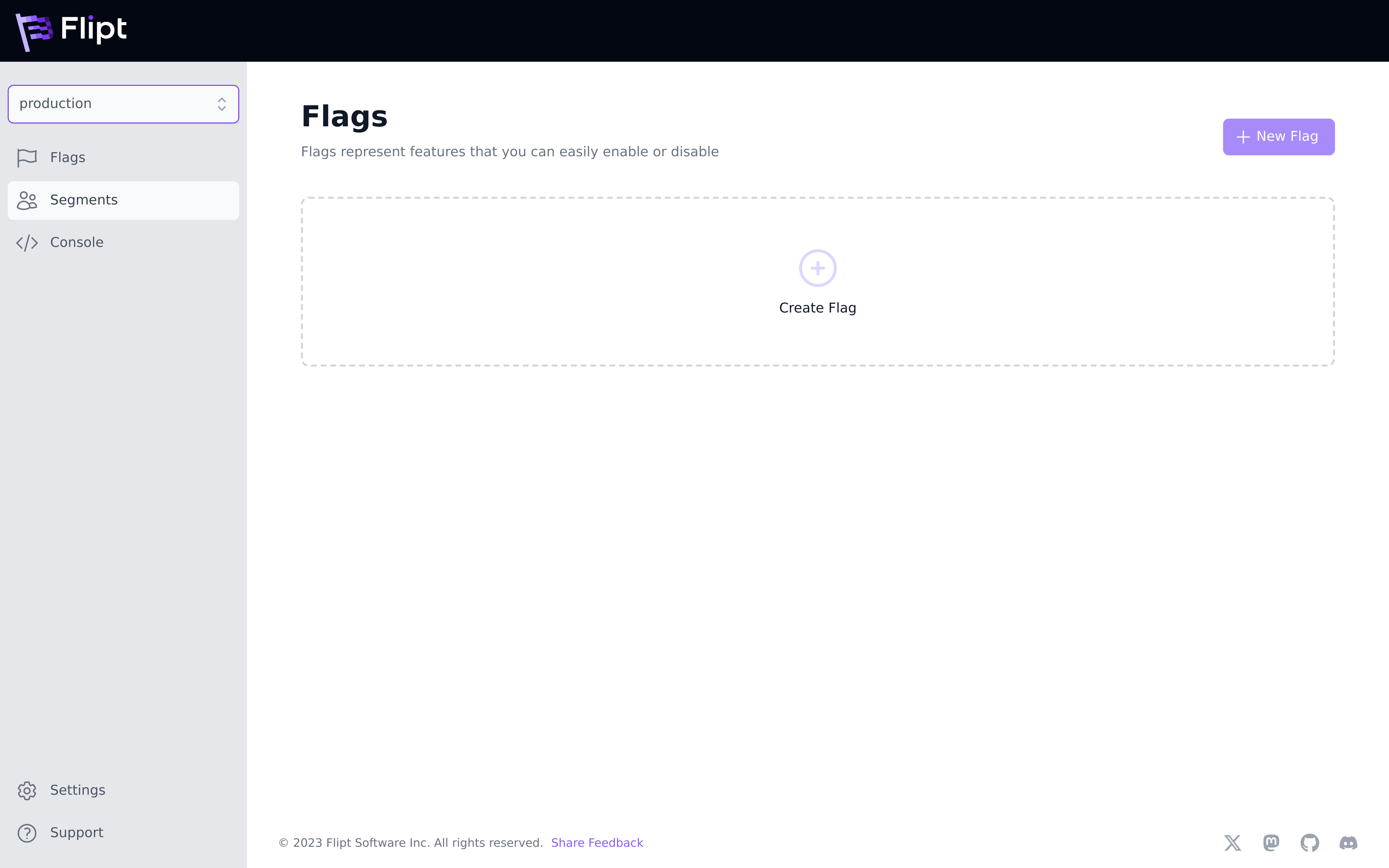 Another common use-case of Namespaces is to separate Flipt data by internal team or organization.
All data created in one namespace is only accessible within that namespace, meaning flags/segments/etc must be created in each namespace in which they’re to be used.If a namespace isn’t selected then the ‘Default’ namespace is used.
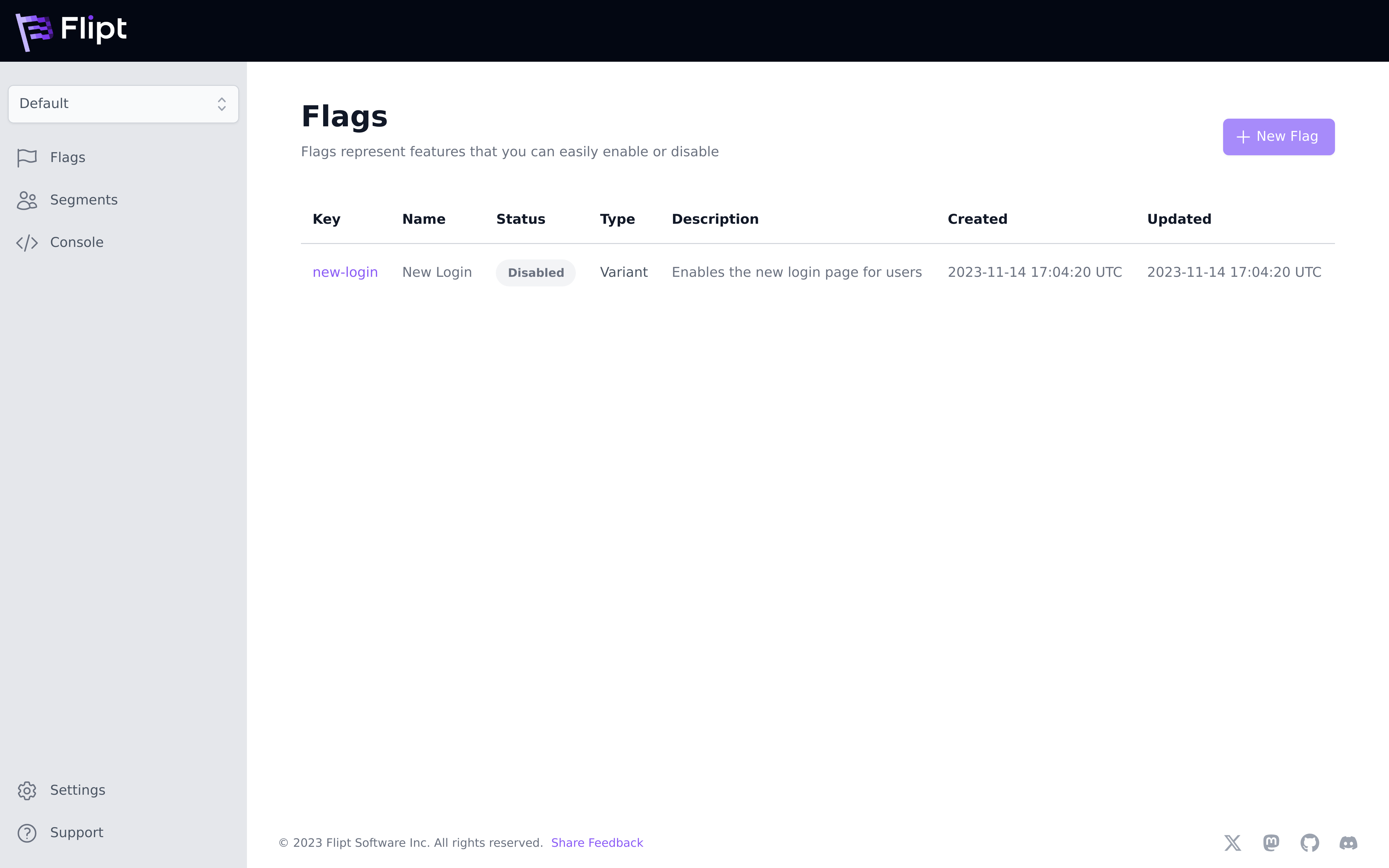 Namespaces can be managed within the
 Settings section of the Flipt UI:
Flags
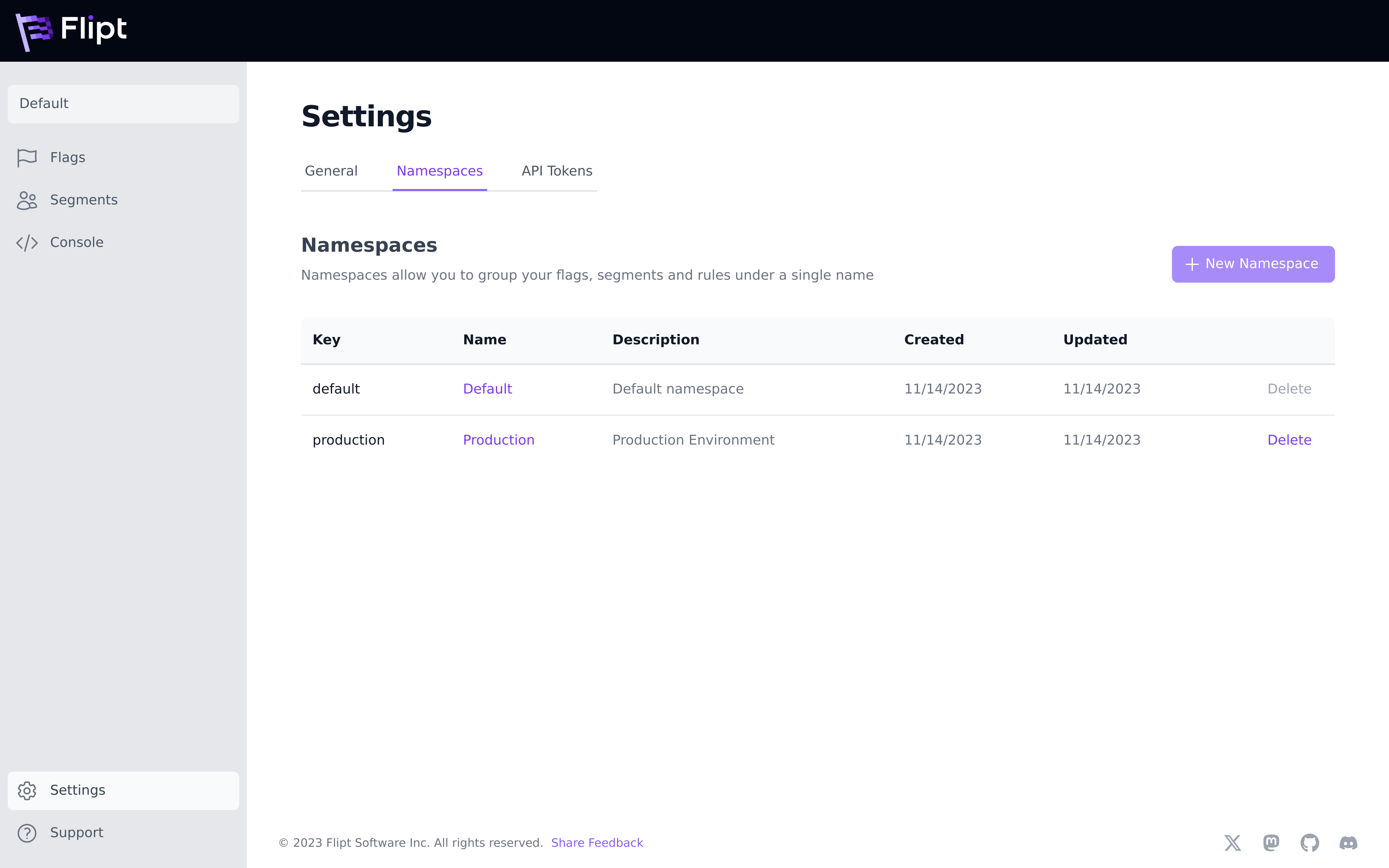
Flags are the basic unit in the Flipt ecosystem. Flags represent experiments or features that you want to be able to enable or disable for users of your applications. For example, a flag namednew-contact-page could be used to determine whether
or not a given user sees the latest version of a ‘Contact Us’ page that you are
working on when they visit your homepage.
Flags can be used as simple on/off toggles or with variants and rules to support
more elaborate use cases.
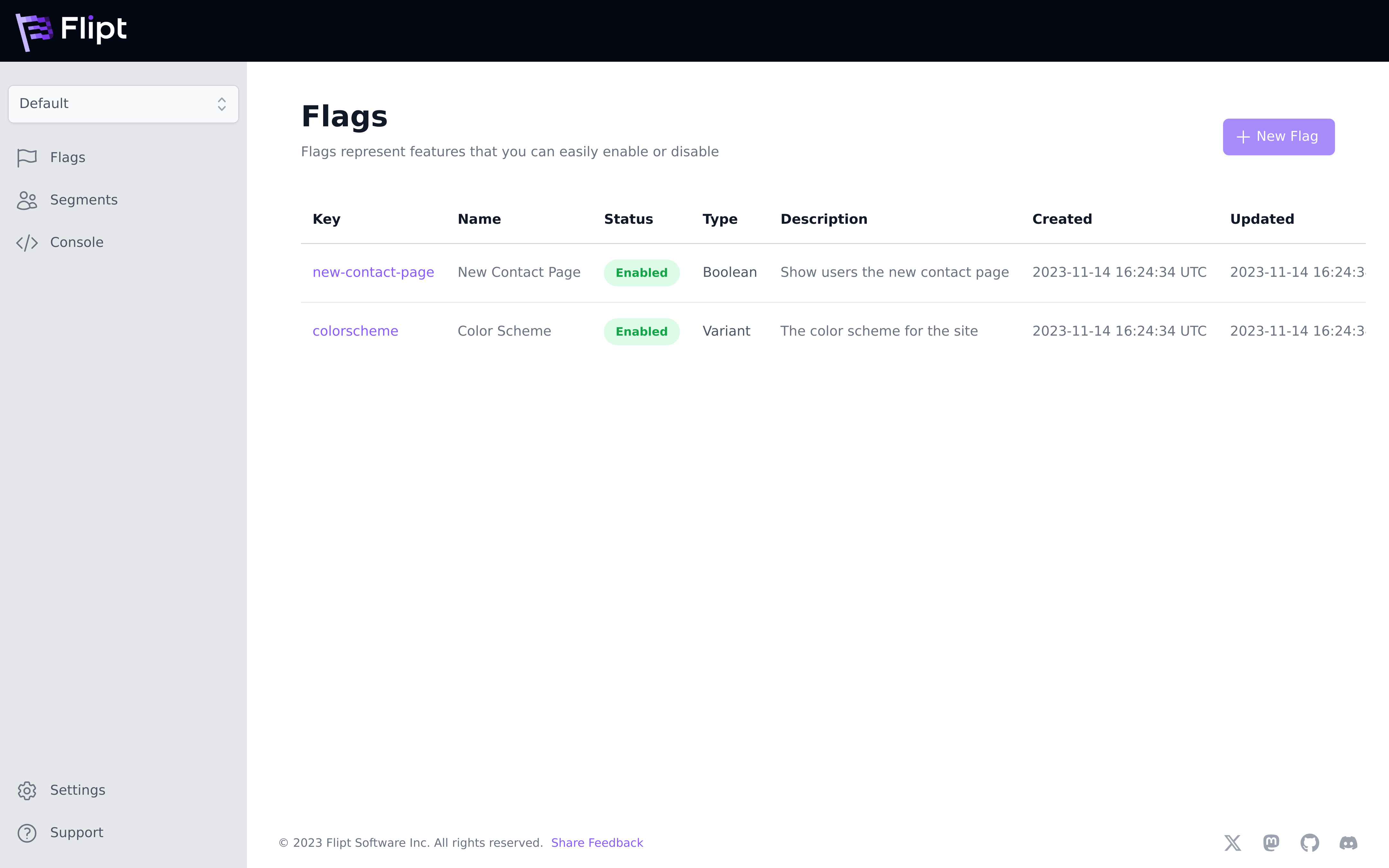 There are two types of flags:
- Variant which allows you to return a single variant for a given flag given a set of evaluation rules. This is the default flag type.
- Boolean which allows you to return a boolean value for a given flag.
Variant Flags
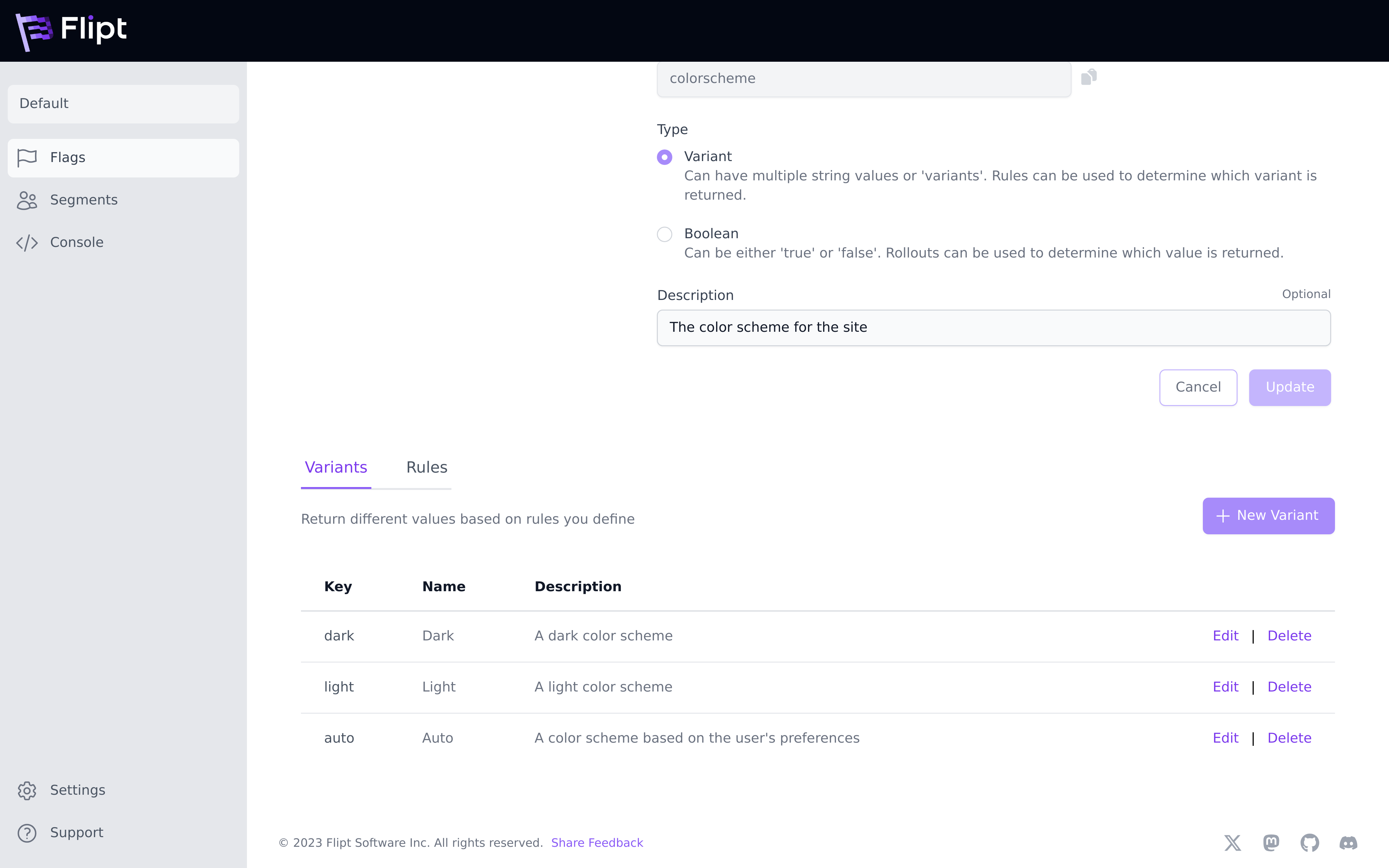
Variants are options for flags. For example, if you have a flagcolorscheme
that determines which main colors your users see when they login to your
application, then possible variants could include dark, light or auto.
Boolean Flags
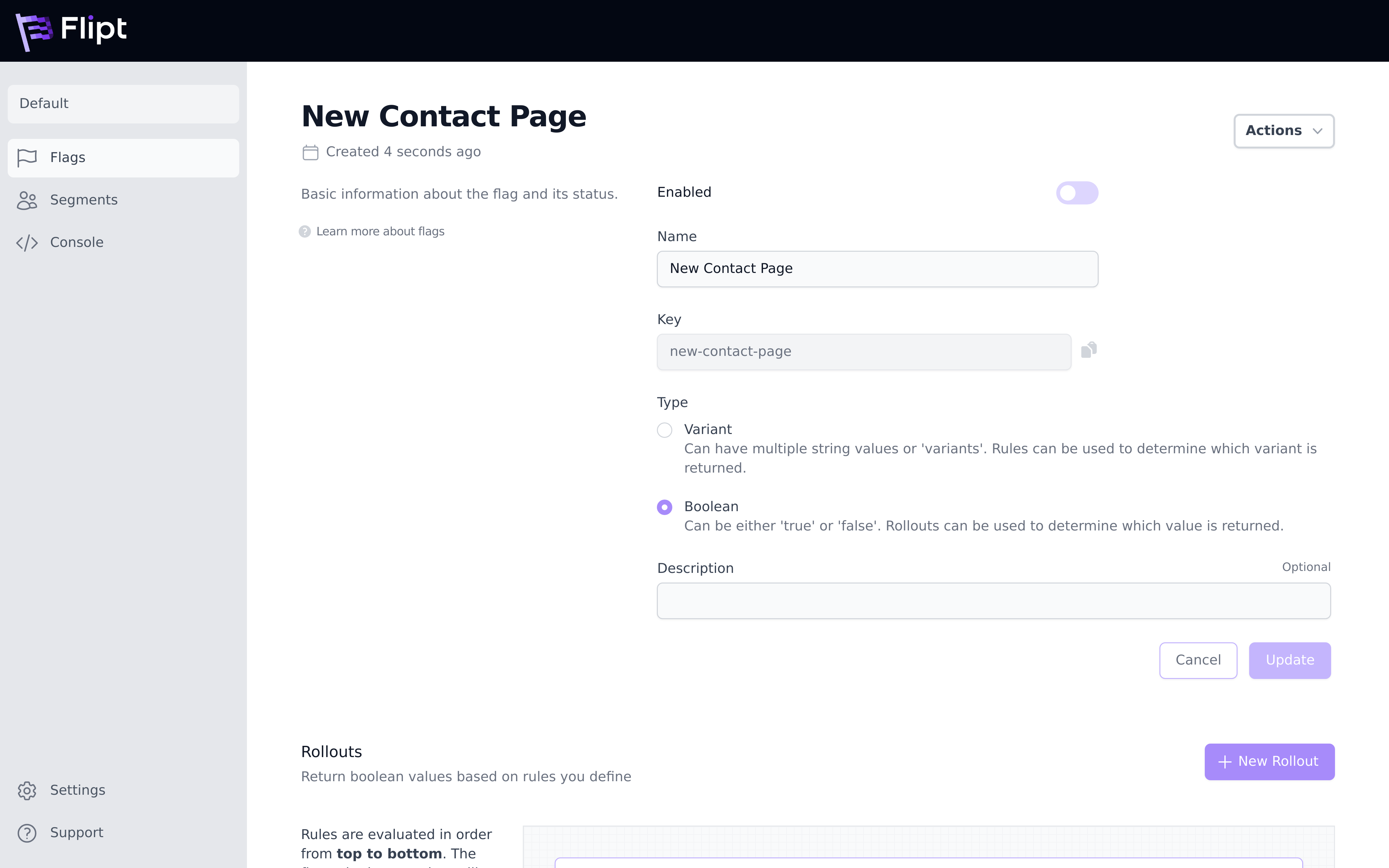
Boolean flags are a special type of flag that allow you to return a boolean value for a given flag. You can use boolean flags to determine if a feature is enabled or disabled for a given entity (user, device, etc) by returningtrue or false respectively. Boolean flags work well for simple use cases where you don’t need to return multiple variants.
Boolean flags can be configured with rollout rules to determine which entities receive true or false for a given flag.
Segments
Segments allow you to split your user base or audience up into predefined slices. This is a powerful feature that enables targeting groups to determine if a flag or variant applies to them. An example segment could benew-users.
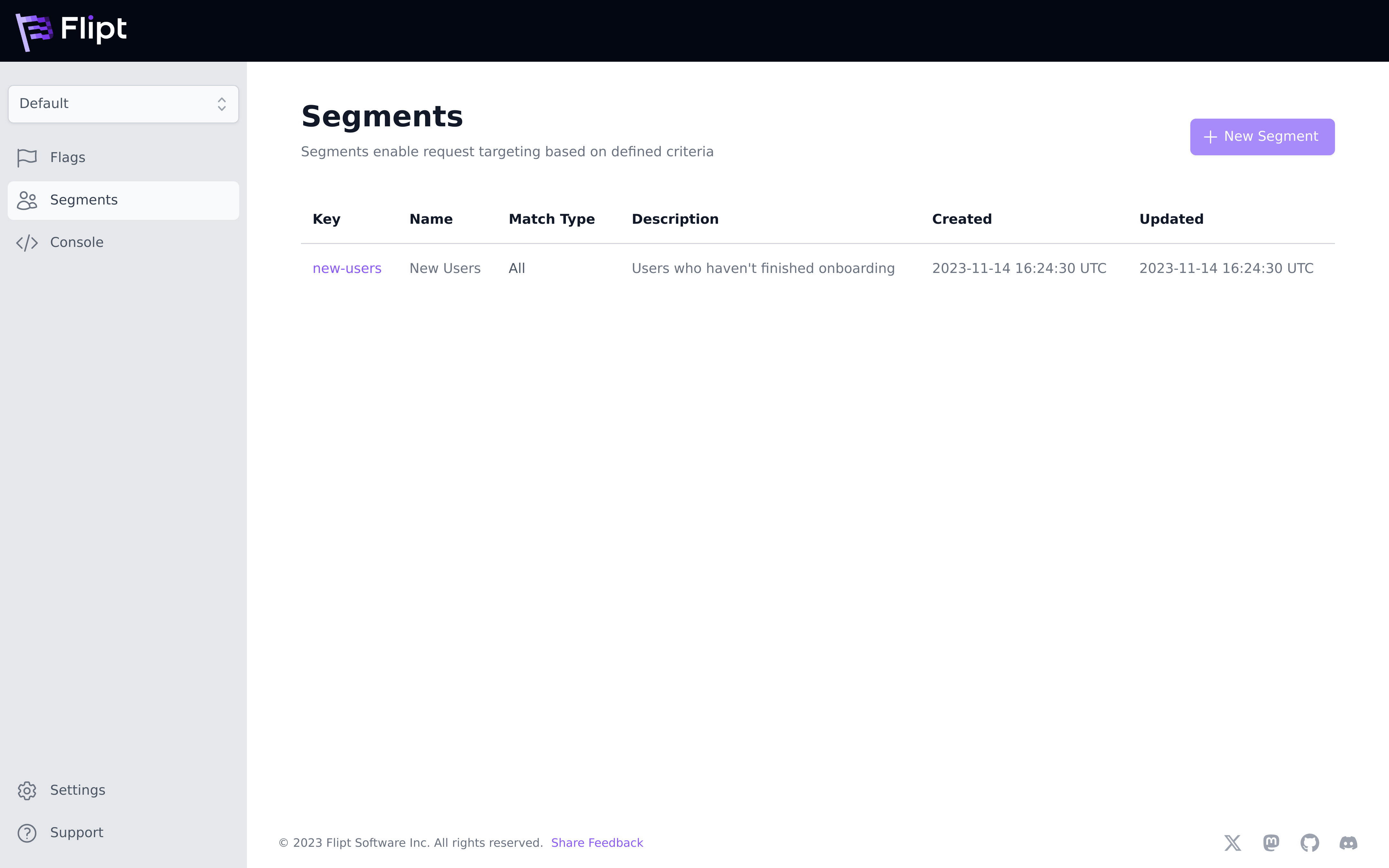
Segments are global within a Flipt namespace.
Match Types
When configuring a segment you can choose aMatch Type of either:
- Match All which requires ALL constraints to match for the segment to apply for evaluation.
- Match Any which requires AT LEAST ONE constraint to match for the segment to apply for evaluation.
Constraints
Constraints allow you to determine which segment a given entity is a part of. For example, for a user to fall into the abovenew-users segment, you may want
to check their finished_onboarding property.
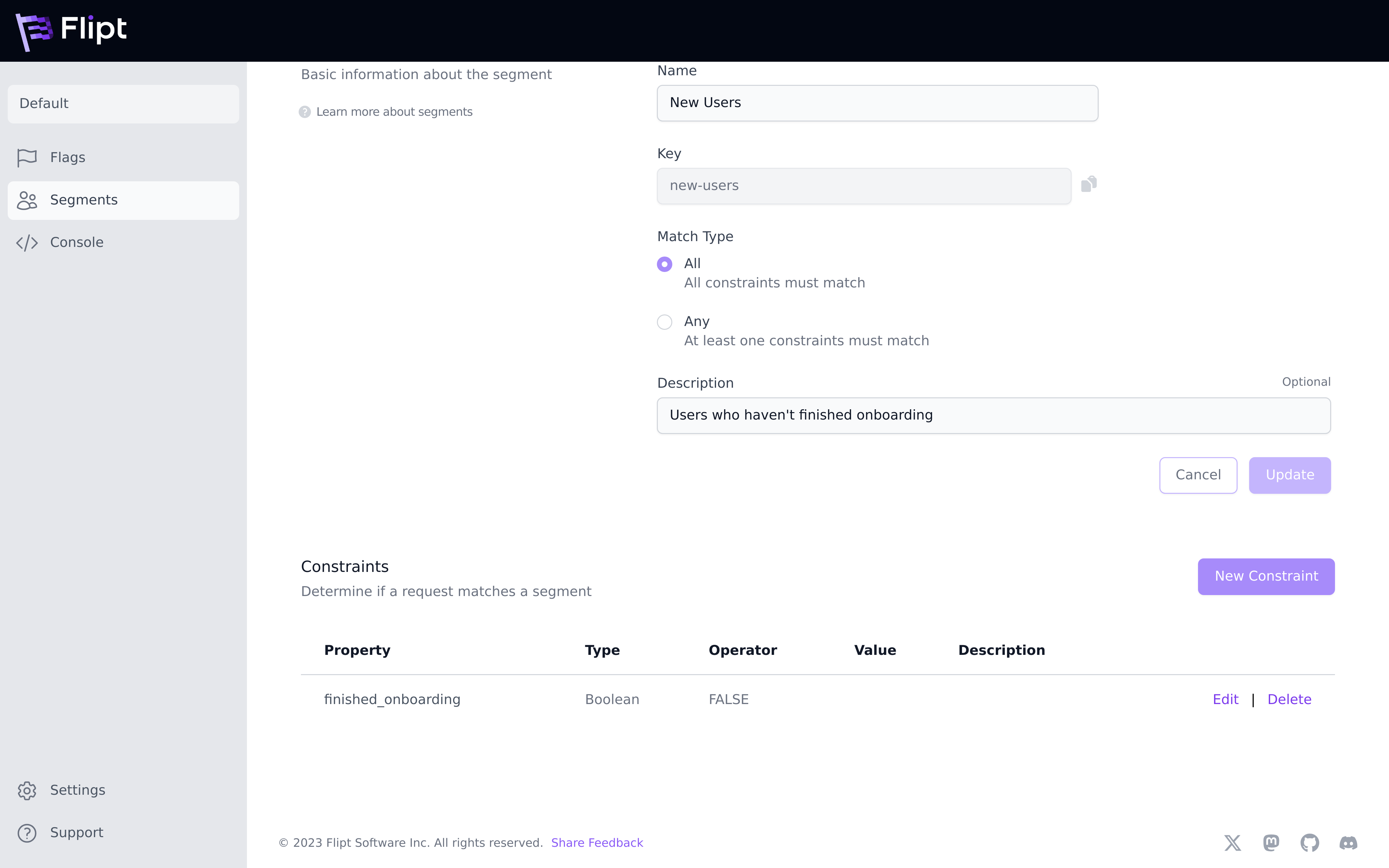 All constraints have a property, type, operator and optionally a value.
Constraint Types
Currently 4 constraint types are available:- String which allows you to check a string property of an entity
- Number which allows you to check a number property of an entity (integer or float)
- Boolean which allows you to check a boolean property of an entity such as
trueorfalse - DateTime which allows you to check a date or datetime property of an entity such as
2020-01-01or2020-01-01T00:00:00Z(RFC3339)
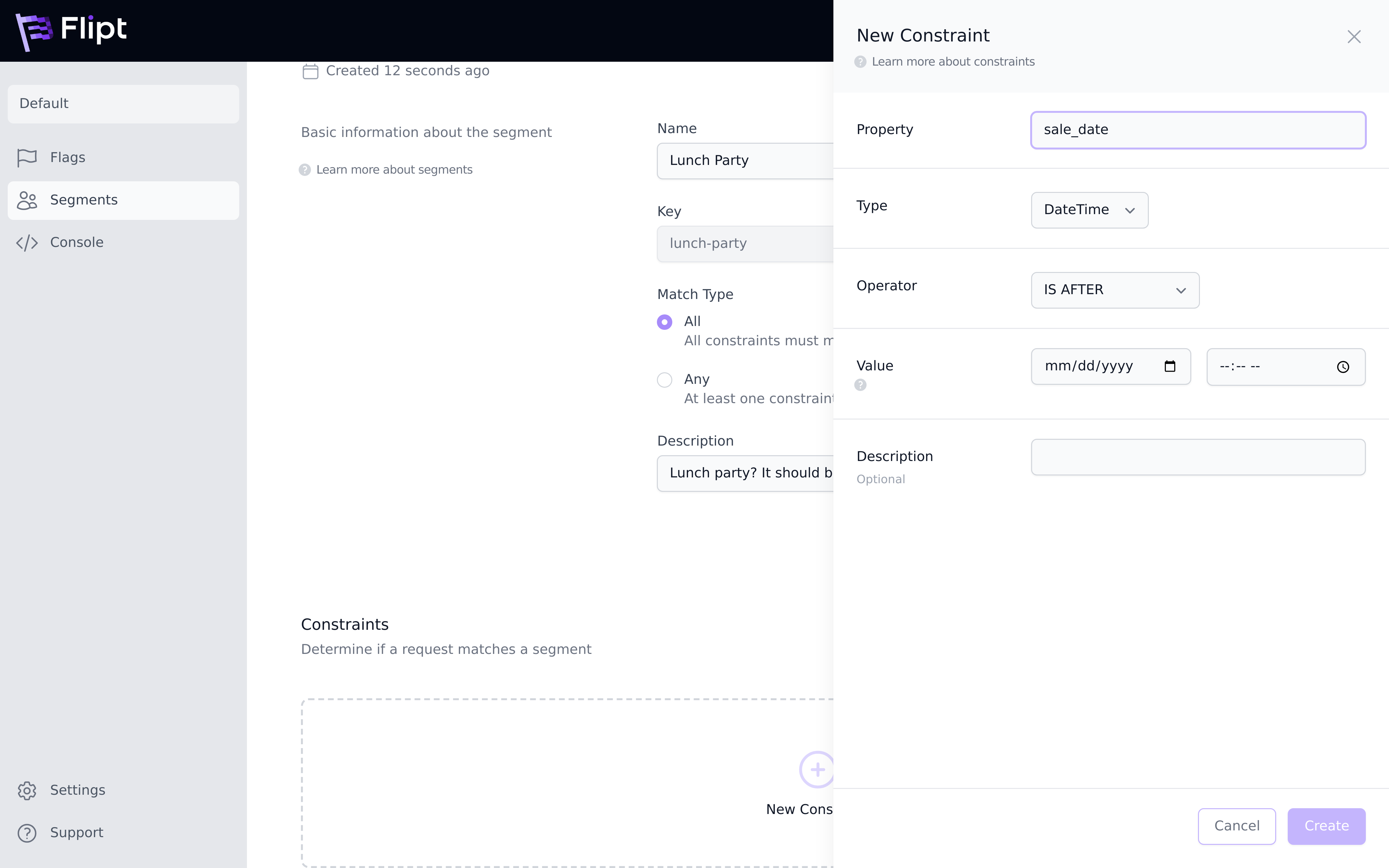
The constraint value is represented as a string in transit and in the
database, however it’s coerced into the appropriate type for evaluation.
Rules
Rules are only available for Variant flags. This was the only
flag type available pre-v1.24.0 of Flipt.
IF IN segment THEN RETURN variant_a or they can be
richer by using distribution logic to roll out features on a percentage basis.
Continuing our previous example, we may want to return the flag variant dark
for all entities in the new-users segment. This would be configured like so:
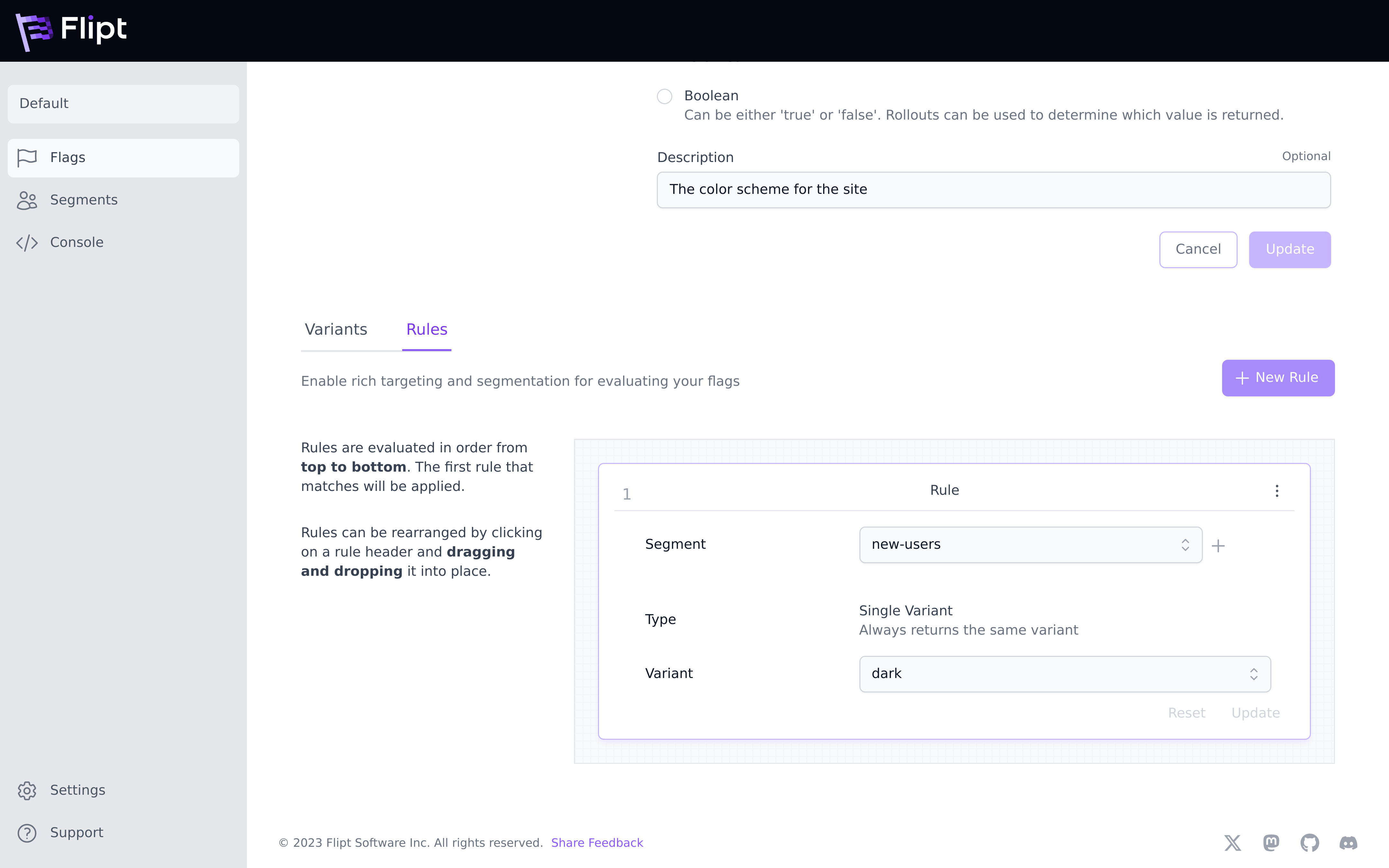 Rules are evaluated in order per their rank from 1-N. The first rule that
matches wins. Once created, rules can be re-ordered to change how they’re
evaluated.
Rules are evaluated in order per their rank from 1-N. The first rule that
matches wins. Once created, rules can be re-ordered to change how they’re
evaluated.
Distributions
Distributions allow you to return different variants of your flag to different percentages of your user base based on your rules. Let’s say that instead of always showing thedark variant to your new-users
segment, you want to show dark to 10% of new-users, light to 30%, and auto
to the remaining 60%. You would accomplish this using rules with distributions:
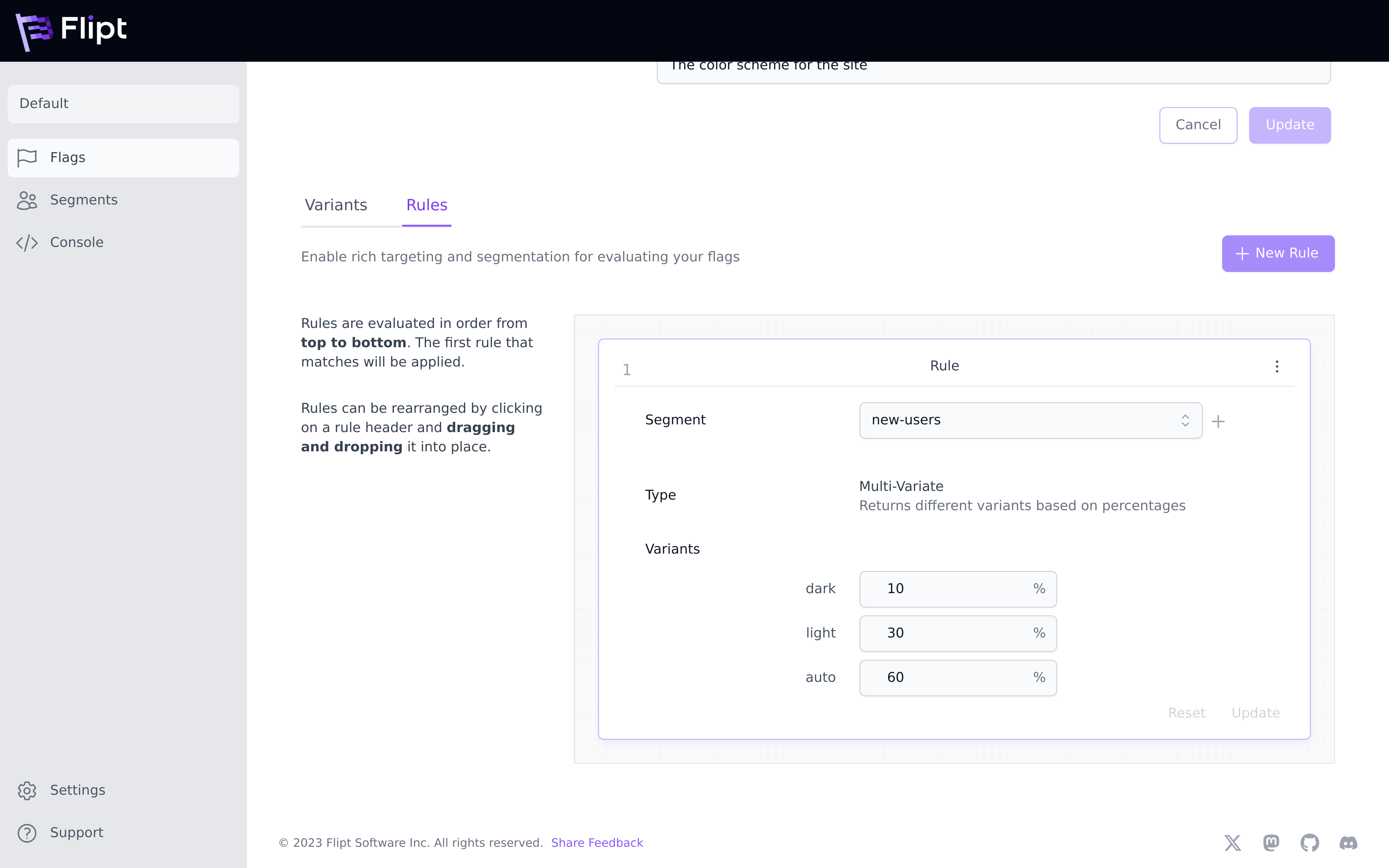 The ability to manage distributions, as illustrated in the image above, is an extremely powerful feature of Flipt that can help you seamlessly deploy new features of your applications to your users while also limiting the reach of potential bugs.
Rollouts
Rollouts are only available for Boolean flags. Rollouts were
introduced in v1.24.0 of Flipt.
true or false based on the flags enabled property. Rollouts allow you to potentially change this value at request time.
Rollouts are a sequence of conditions which when one is matched for a request context, overrides the flag’s enabled property.
Current rollout types include:
- Threshold which allows you to return
trueorfalsefor a given percentage of entities. - Segments Match which allows you to return
trueorfalseif an entity matches a given segment.
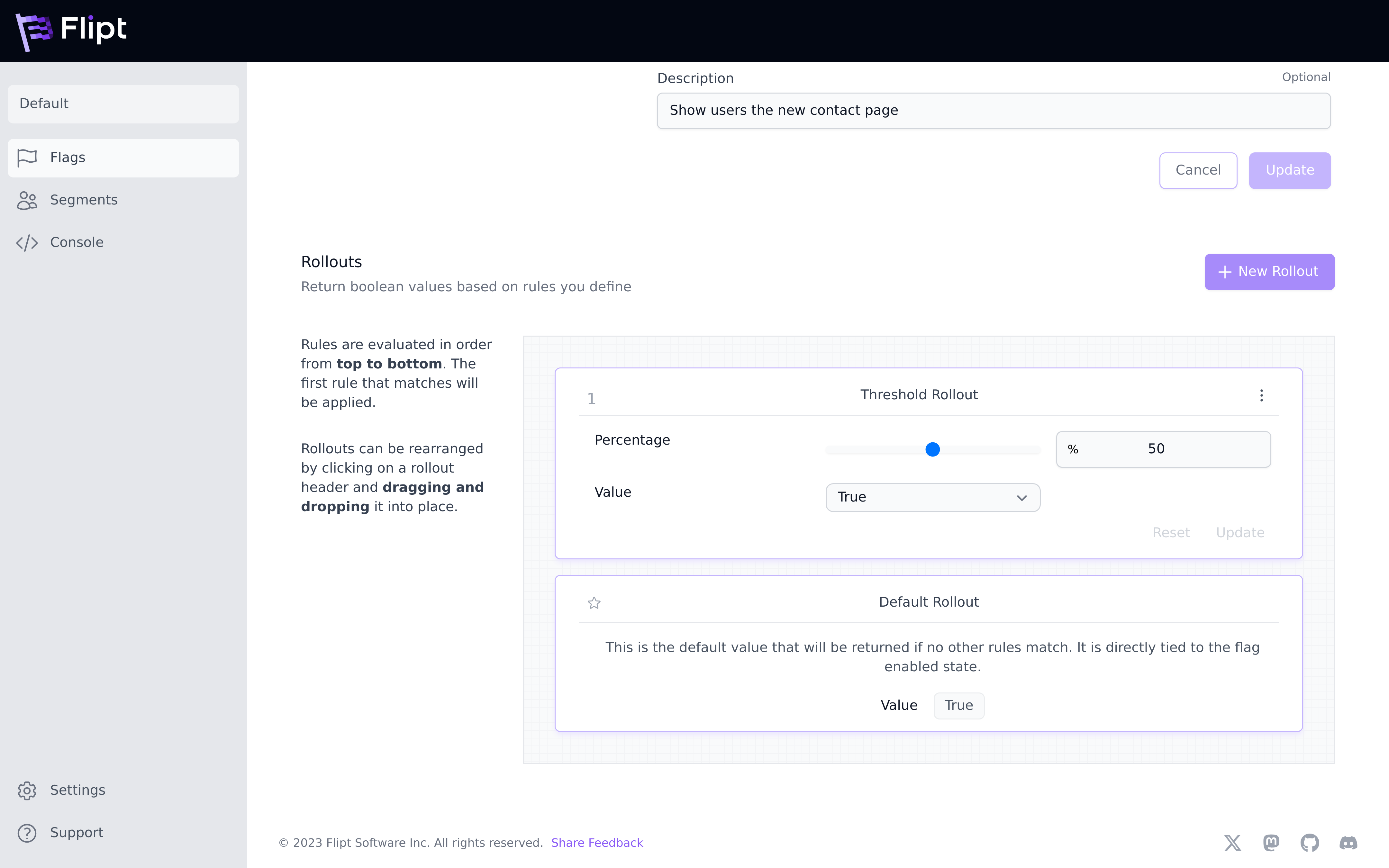 Rollouts work similar to Rules in that they’re evaluated in order per their rank from 1-N. The first rollout that matches wins. Once created, rollouts can be re-ordered to change how they’re evaluated.
Evaluation
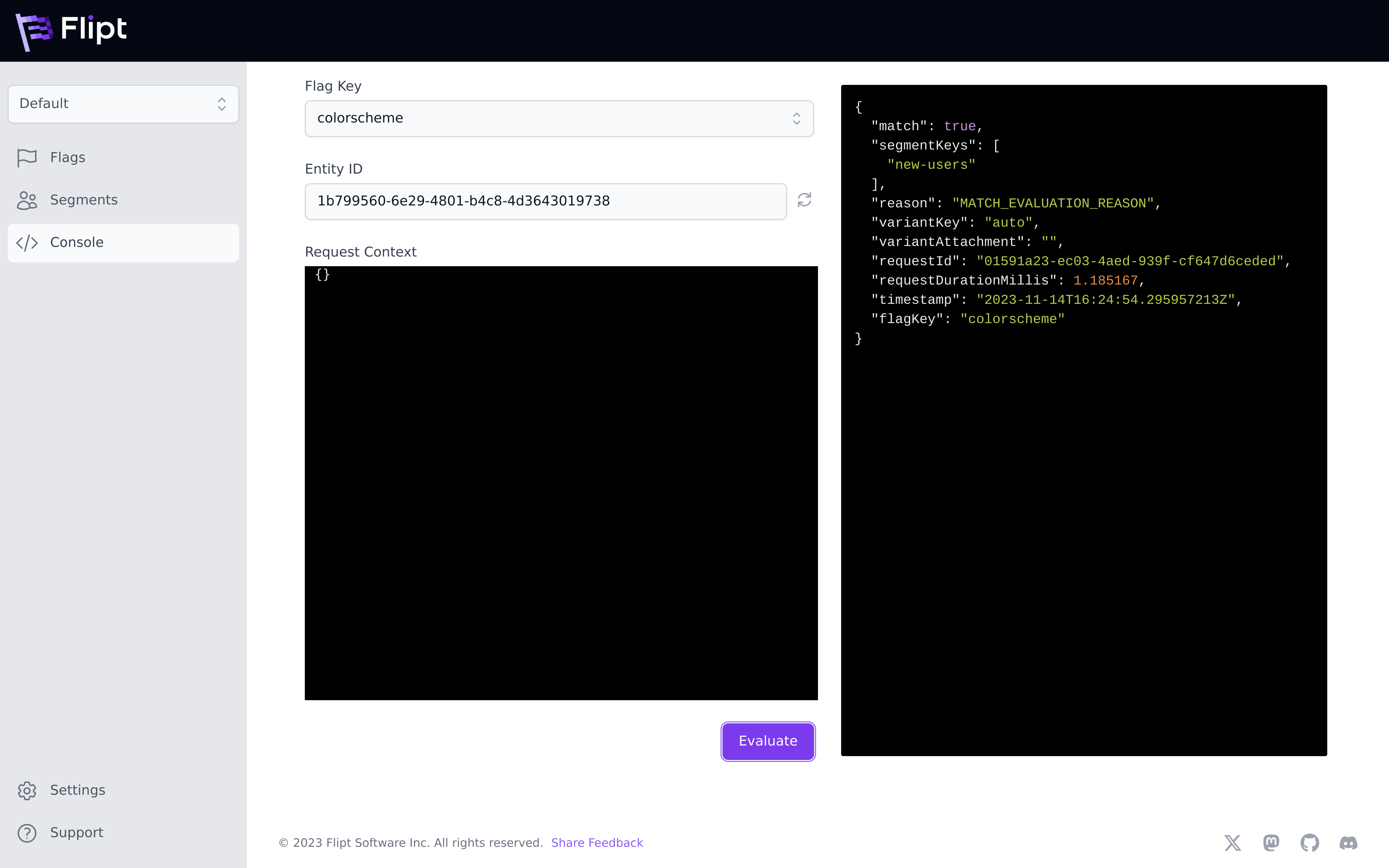
Evaluation is the process of sending requests to the Flipt server to process and determine if that request matches any of your segments and if so which variant or boolean value to return depending on flag type. In the above example involving colors, evaluation is where you send information about your current user to determine if they’re anew-user, and which color
(dark, auto, or light) that they should see for their main color scheme.
Entities
Evaluation works by uniquely identifying each thing that you want to compare against your segments and flags. We call this anentity in the Flipt
ecosystem. More often than not this will be a user, but we didn’t want to make
any assumptions about how your application works, which is why entity was chosen.
EntityWhat you want to test against in your application
entityId and it’s a
simple string. It’s up to you what that entityId is.
It could be a:
- email address
- userID
- IP address
- physical address
- etc
Context
The final piece of the puzzle is context. Context allows Flipt to determine which segment your entity falls into by comparing it to all the possible constraints that you defined.ContextMetadata associated with your entity used to determine which if any segments
that entity is a member of
context is a simple map of key-value pairs where the key is the
property to match against all constraints, and the value is what’s compared.
Bucketing
Bucketing is the process of determining which variant to return for a given evaluation request. Flipt uses a hashing algorithm to determine which variant to return for a givenflagKey, entityID and context. This is what allows Flipt to return the same variant every time (also sometimes referred to as stickiness).
Flipt never persists any information about your entities or context or which
variant was returned for a given evaluation request. This is all done at
runtime and is ephemeral.This allows Flipt to be used in a wide variety of
applications and use cases without having to worry about inadvertently storing
personally identifiable information (PII) or other privacy concerns.
- Flipt takes the
flagKeyandentityIDand concatenates them together to form a string that looks likeflagKey:entityID. This is called the key. - Flipt then takes this new key and uses a hashing algorithm (CRC-32 ChecksumIEEE) to create a 32-bit integer called the hash.
- Flipt then creates a set of buckets from 0‐999 (1000 total buckets), mapping them with a sorted set of the distributions for the flag.
- Finally, Flipt takes the hash and uses the modulo operator to determine which bucket the hashed value falls into. The distribution that maps to that bucket is then returned.
A and B.
If distribution A has a 30% ‘rollout’, then it would ‘take up’ buckets 0‐299 (out of the 1000 buckets). Distribution B would take up the remaining buckets 300‐999.
The flagKey/entityID hashed value is a 32bit integer on which Flipt performs a modulo operation (% 1000) so that it ‘s guaranteed to return a number between 0‐999.
The result of the modulo operation is then used to determine which distribution to return via the bucket mapping. If the result is between 0‐299, then distribution A is returned, otherwise distribution B is returned.